
How Steel Casting Supports Demanding Industrial Applications
- Industry
Arya George
- 0
- 7 minutes read
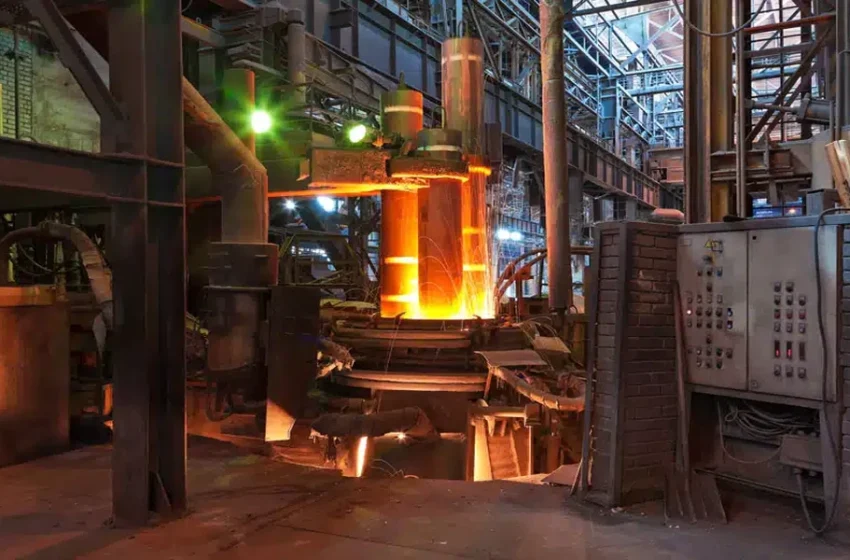
Industrial components are often expected to perform reliably under pressure, heat, vibration, and repeated mechanical loads. From pump housings and valve bodies to heavy machinery parts, the quality of each component can directly affect equipment performance and service life. Steel casting offers manufacturers a practical way to produce complex metal components while meeting specific strength, durability, and dimensional requirements.
However, producing a dependable casting involves more than pouring molten metal into a mold. Material selection, mold design, cooling conditions, finishing, and inspection all influence the final result. Understanding these factors helps businesses make better manufacturing decisions and select components suited to their applications.
Understanding the Value of Steel Casting
Steel is widely used in industrial manufacturing because it offers a useful combination of strength, toughness, and versatility. Different grades can be selected according to the operating conditions a component must withstand, making the material suitable for applications across energy, transportation, construction, mining, and heavy engineering.
A reliable steel casting manufacturer considers the component’s design, expected loads, operating environment, and production requirements before selecting the appropriate material and casting process. This approach helps ensure that the finished part is designed around its intended purpose rather than simply its shape.
Another advantage of casting is its ability to produce intricate geometries and substantial sections that may be difficult or expensive to manufacture using other methods. Depending on the design, this can also reduce material waste and simplify subsequent machining.
Choosing Materials for Specific Operating Conditions
Not every industrial component requires the same material properties. A part exposed to moisture or chemicals may need corrosion resistance, while a component used in heavy machinery may require greater toughness and resistance to impact.
Stainless steel is often considered when corrosion resistance is a major requirement. Carbon and alloy steels, meanwhile, can be appropriate for applications where strength, wear resistance, or particular mechanical properties are important.
When evaluating stainless steel casting companies, industrial buyers should consider their ability to work with suitable grades, maintain material consistency, and verify that finished components meet the required specifications. Material selection should always reflect the actual service environment, including temperature, pressure, exposure to chemicals, and expected mechanical loads.
How Casting Methods Influence Component Quality
The manufacturing method affects the accuracy, surface finish, complexity, and cost of a finished component. Different casting techniques offer distinct advantages, so selecting the right process is essential.
Calmet’s facilities support green sand casting, chemical sand casting, and investment casting.
Each method serves different production requirements.
- Green sand casting is suitable for versatile, cost-conscious production and components used in machinery and agriculture.
- Chemical sand casting uses chemically bonded sand molds and can offer improved dimensional accuracy and surface finish.
- Investment casting is useful for intricate shapes where fine details and a smoother surface are important.
A well-equipped steel casting foundry evaluates the component’s design, dimensions, material grade, and expected production volume before recommending a suitable process. This helps balance manufacturing efficiency with the performance requirements of the final product.
Engineering Support for Complex Designs
Industrial components are not always straightforward to manufacture. Internal passages, unusual contours, varying wall thicknesses, and tight dimensional tolerances can introduce challenges during mold design and production.
Engineering support can help address these issues before manufacturing begins. Design reviews, prototypes, and process evaluations allow potential problems to be identified early, reducing the likelihood of costly tooling changes or production delays.
Calmet describes an engineering approach that includes customer collaboration, prototyping, material selection, and design refinement.
These capabilities are particularly valuable when developing components for specialized machinery or equipment that requires a precise fit.
Quality Control From Raw Material to Finished Part
Even a carefully designed component can underperform if the material composition or manufacturing process is inconsistent. Quality assurance must therefore extend across the entire production cycle.
A capable stainless steel foundry uses material verification, dimensional inspection, and appropriate testing to confirm that castings meet their specified requirements.
Calmet describes a three-stage inspection process covering raw materials, dimensional accuracy, and specialized testing. Its listed capabilities include spectrometric analysis, tensile testing, coordinate measuring equipment, X-ray testing, ultrasonic testing, dye penetrant testing, and hydro testing.
These checks help identify material inconsistencies and potential defects before components are delivered. The appropriate inspection methods depend on the material, component design, applicable specifications, and intended use.
Applications Across Industrial Sectors
Steel castings are used in industries where components must withstand demanding operating conditions.
In oil and gas operations, valve bodies, pump housings, and pipeline fittings need to perform reliably under pressure. Mining equipment requires components capable of handling impact and abrasive conditions. Railway systems depend on durable parts designed for repeated mechanical loading, while energy facilities need components suited to their particular thermal and structural requirements.
Calmet identifies applications across oil and gas, chemical processing, power generation, mining, automotive, railway, food processing, and construction.
These varied applications demonstrate why manufacturers must consider operating conditions and material properties together rather than selecting components based on dimensions alone.
Beyond Casting With Machining and Assembly
A casting frequently requires additional operations before it can be installed in equipment. Machining may be needed to produce accurate mounting surfaces, threaded holes, or other functional features. Heat treatment and surface finishing may also be necessary to achieve the specified properties.
Calmet provides additional manufacturing capabilities that include machining, assembly, engineering support, and specialized treatments.
Working with a supplier that coordinates several production stages can simplify procurement and reduce the challenges of managing multiple vendors. It can also improve communication when design changes or quality concerns arise.
“Reliable steel castings depend on thoughtful material selection, suitable manufacturing methods, engineering expertise, and consistent quality control. Businesses should evaluate these factors alongside machining capabilities, inspection procedures, production requirements, and long-term supply reliability when choosing a manufacturing partner. Calmet combines steel casting with engineering, machining, assembly, and specialized inspection to support industrial customers with varied component requirements. For businesses sourcing complex components across different metal categories, partnering with an experienced casting manufacturer can also simplify projects involving custom iron castings and other specialized parts, helping maintain consistency from initial design through finished production.”
